
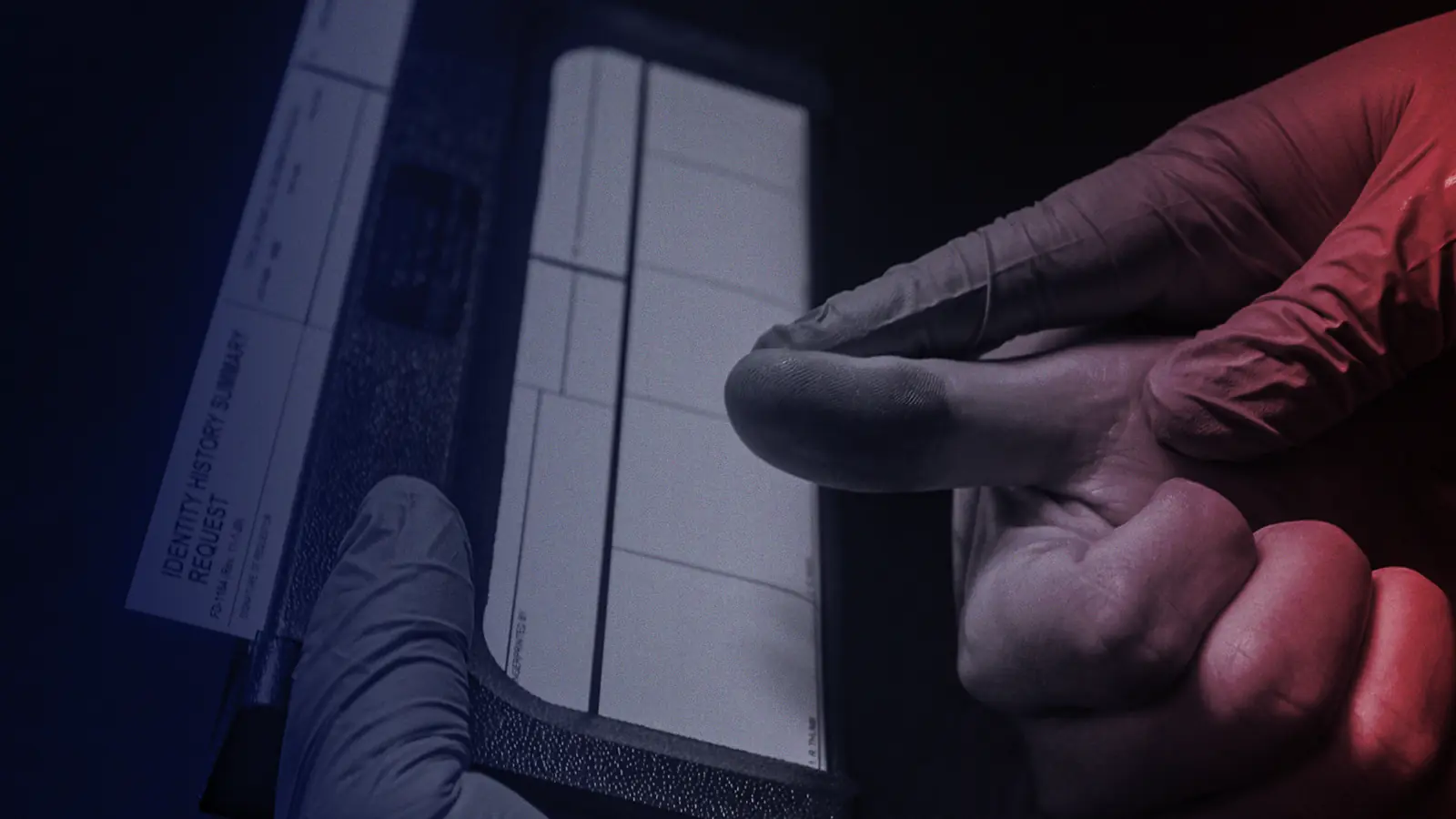
Fingerprint Examination
Fingerprint Examination is the forensic specialty devoted to identifying, developing, collecting, analyzing and comparing friction ridge impressions, including fingerprints, palm prints and footprints, to investigate traces of human contact and produce technical evidence for identifying people and clarifying facts.
GET IN TOUCHWHAT IT IS
Fingerprint Examination is the forensic specialty devoted to identifying, developing, collecting, analyzing and comparing friction ridge impressions, including fingerprints, palm prints and footprints, to investigate traces of human contact and produce technical evidence for identifying people and clarifying facts.
Using specialized scientific techniques and procedures, it examines friction ridge impressions found on documents, objects, surfaces and places of investigative interest, analyzing their individualizing characteristics and comparing them with reference standards.
Fingerprint science covers areas such as Dactyloscopy (fingerprints), Palmar Print Examination (palm prints), Podoscopy (footprints) and Poroscopy (the study of the pores on friction ridges).
Its methods are used to produce and validate evidence in judicial and extrajudicial investigations, as well as in human identification procedures and biometric collection to meet national and international requirements.
The investigation of traces of human contact also draws on Forensic Genetics, through touch DNA analysis, widening the options for examining evidence whose friction ridge impressions are insufficient for comparison.
WHAT IT IS FOR
Fingerprint Examination makes it possible to investigate the presence of fingerprints and other friction ridge traces, analyze their characteristics, compare them with reference standards and produce technical-scientific evidence related to human identification.
Its examinations provide support to clarify events, investigate the source of impressions found on documents and objects and assess the reliability of fingerprint evidence used in court proceedings and private investigations.
Integration with Forensic Genetics adds methods for recovering and analyzing biological material deposited through human contact, allowing evidence to be investigated through genetic profiles and specialized DNA sequencing techniques.
Lifting, Developing, Collecting and Extracting Fingerprints
Fingerprint Survey at Scenes
Technical examination of locations tied to investigations, including crime scenes, break-ins and other incidents, to locate, develop, collect and document friction ridge traces.
Fingerprint Extraction from Objects and Surfaces
Specialized procedures to develop, recover and record fingerprints on objects, packaging, furniture, utensils and other surfaces of forensic interest.
Latent Fingerprint Development
Use of physical, optical and chemical methods to bring out impressions that are not visible to the naked eye, allowing them to be recorded and analyzed.
Collection of Reference Standards
Taking and recording fingerprints from identified people, for fingerprint comparisons and human identification procedures.
Analysis, Comparison and Human Identification
Fingerprint Analysis
Examination of the ridge characteristics, minutiae and other individualizing elements in the impressions collected.
Fingerprint Comparison
Technical-scientific comparison between questioned impressions and reference standards, assessing matches and differences relevant to establishing identity.
Partial Fingerprint Analysis
Examination of fragments and incomplete impressions, identifying individualizing characteristics and elements relevant to making a comparison.
Human Identification by Friction Ridge Impressions
Techniques for analyzing and comparing fingerprints, palm prints and footprints to investigate people's identity.
Genetic Analysis Complementing Fingerprint Examination
Touch DNA Analysis
Collection and analysis of biological traces left by human contact on objects and surfaces, allowing genetic investigation of evidence that lacks friction ridge impressions suitable for fingerprint comparison.
Human Identification by Genetic Profile
Analysis of genetic material recovered from objects and surfaces, using molecular markers to obtain genetic profiles and compare them with reference samples.
Forensic Genetic Sequencing
Specialized DNA sequencing techniques to analyze genetic markers and investigate biological traces, complementing conventional methods of genetic identification.
Combining Fingerprint Examination and Forensic Genetics broadens the technical-scientific resources used to investigate traces of human contact, bringing together different methods of analysis and identification.
Fingerprinting for International Identification
Fingerprinting for the FBI (United States)
Specialized fingerprinting for identification and criminal background check procedures before the Federal Bureau of Investigation (FBI), using the official FD-258 and FD-1164 forms.
Fingerprinting for the RCMP (Canada)
Specialized fingerprinting for identification and background check procedures before the Royal Canadian Mounted Police (RCMP), using the C-216C form.
Judicial and Extrajudicial Forensics
Judicial and Extrajudicial Fingerprint Examination
Specialized examinations to investigate, analyze and clarify facts related to fingerprints and other friction ridge traces in civil, criminal, administrative and private matters.
Critical Review of Fingerprint Reports
Technical assessment of previously produced reports, covering collection procedures, comparison methods, documentation of traces, scientific grounding and consistency of conclusions.
Forensic Expert Assistance in Fingerprint Examination
Specialized oversight of court-ordered examinations, drafting of expert questions, attendance at examinations, review of reports and production of technical opinions to assess or challenge evidence on a well-founded basis.
Fingerprint Reports and Opinions
Preparation of technical documents that set out the procedures carried out, the materials examined, the results obtained and the well-grounded conclusions of the forensic analysis.
WHY ZR2 FORENSICS
ZR2 Forensics brings together specialized knowledge in Fingerprint Examination, Dactyloscopy and Human Identification, integrating technical-scientific procedures for lifting, developing, collecting, extracting, analyzing and comparing friction ridge impressions. Our work covers criminal investigations, civil matters, judicial and extrajudicial proceedings, and international identification and background verification services. ZR2 Forensics is a member of the International Association for Identification (IAI), a leading international body in the forensic identification sciences.
ZR2 Forensics also specializes in professional fingerprinting for procedures before the Federal Bureau of Investigation (FBI) in the United States and the Royal Canadian Mounted Police (RCMP) in Canada, including preparing the official forms and meeting the documentary requirements of each process.
Our multidisciplinary practice combines Fingerprint Examination and Forensic Genetics in investigating traces of human contact, bringing together friction ridge identification methods, touch DNA analysis, genetic profiling and specialized genetic sequencing techniques.
SPEAK WITH A FORENSIC SPECIALIST
Fingerprints and biological traces are important elements for investigation and human identification.
ZR2 Forensics carries out specialized examinations to lift traces, compare fingerprints, analyze documents and assess fingerprint reports, drawing on Forensic Genetics in the investigation of human-contact evidence.
For international identification procedures, see also our Fingerprinting for International Background Check services.
EVIDENCE PRESERVATION
Properly preserving objects, documents and surfaces is essential for fingerprint and genetic examinations.
Latent fingerprints and biological traces can be altered or destroyed by direct contact, cleaning, friction, moisture, heat and improper handling.
Before sending objects or documents for analysis, follow these guidelines:
- Avoid touching the surfacesdo not handle directly the areas that may hold fingerprints or biological material.
- Do not clean the materialavoid using water, alcohol, chemicals, cloths or other materials on the objects.
- Preserve the original conditionskeep documents and objects protected from moisture, heat, friction and unnecessary handling.
- Do not try to develop impressionsavoid applying powders, adhesive tape, chemicals or home methods of collection.
- Preserve biological traces tooobjects and surfaces touched by people can hold genetic material of forensic interest, even when no identifiable fingerprints are present.
- Preserve the information about the incidentrecord where the material came from, the date of the events, the place and the people who had contact with the evidence.
Before packaging, transporting or sending the material, speak with our team.